
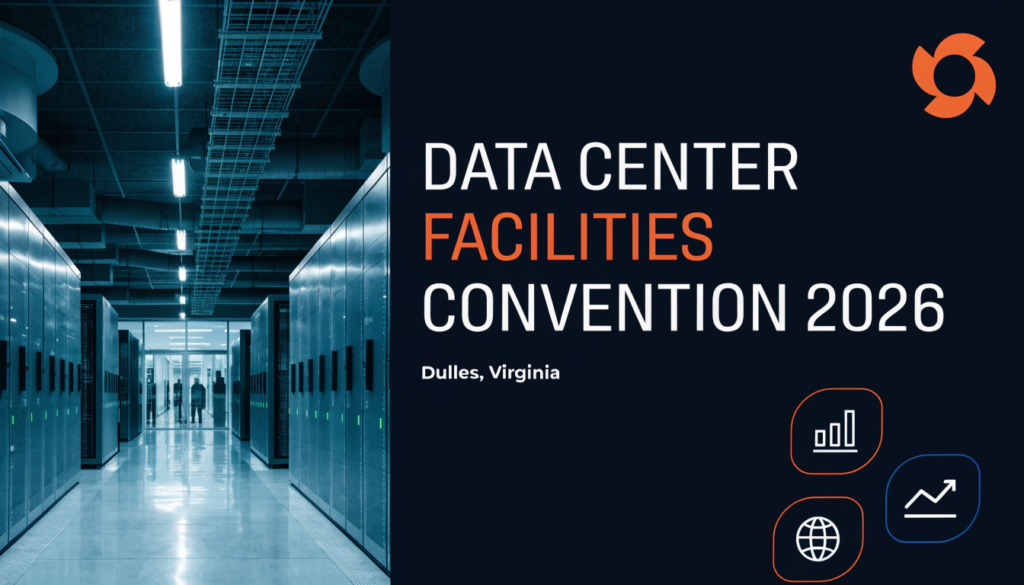
The data center industry is entering a period of rapid transformation. Artificial intelligence, cloud computing, edge applications, rising power requirements, sustainability targets, and increasing digital workloads are changing how data center facilities are designed, built, operated, and maintained. For professionals working across infrastructure, engineering, facilities, energy, and technology, staying informed about these developments is becoming more important than ever.
Against this backdrop, the Data Center Facilities Convention 2026 Dulles is positioned as an important gathering for professionals looking to understand the future of data center facilities and infrastructure. Taking place in Dulles, Virginia, the event provides an opportunity to explore the technologies, strategies, and operational priorities shaping modern data centers.
Whether you are a data center operator, facility manager, engineer, technology provider, consultant, or infrastructure professional, attending the Data Center Facilities Convention 2026 Dulles can help you stay connected with the conversations influencing the industry’s next phase.
Why Data Center Facilities Matter More Than Ever
Data centers have become essential infrastructure for the digital economy. From cloud platforms and financial services to artificial intelligence and enterprise applications, businesses increasingly depend on facilities that can provide reliable computing capacity around the clock.
However, the requirements placed on these facilities are changing quickly. Modern data centers need to support higher power densities, greater computing workloads, stronger cybersecurity, improved energy efficiency, and increasingly sophisticated cooling systems.
AI is one of the biggest forces behind this transformation. AI workloads can place significantly different demands on infrastructure compared with traditional computing. Higher-density computing environments can create additional challenges around power distribution and thermal management, requiring facility teams to rethink established approaches.
At the same time, organizations are under pressure to improve sustainability and control operating costs. This makes efficient cooling, power management, renewable energy integration, monitoring, and facility optimization increasingly important.
The Data Center Facilities Convention 2026 Dulles provides a timely platform for professionals to examine these developments and consider how they may affect future facility strategies.
What Makes Dulles an Important Location?
Dulles, Virginia, is closely associated with the growing Northern Virginia data center market. The region has developed into one of the world’s most significant data center clusters, supported by strong digital infrastructure, connectivity, cloud demand, and proximity to major business and technology markets.
This makes Dulles a particularly relevant location for conversations about data center infrastructure.
Professionals attending the Data Center Facilities Convention 2026 Dulles can benefit from being in a region where data center development, capacity expansion, infrastructure investment, and operational challenges are highly visible.
The location also makes the event relevant to professionals searching for a data center conference Virginia September opportunity where they can connect with others involved in the rapidly changing data center ecosystem.
Key Topics Shaping Data Center Facilities in 2026
The data center industry is too broad to be defined by a single technology. Several interconnected trends are influencing facility planning and operations, and these are expected to remain important throughout 2026.
AI and High-Density Computing
Artificial intelligence is creating new requirements for data center infrastructure. High-performance computing environments can require greater power capacity and more sophisticated thermal management.
For facility professionals, this means planning for future workloads rather than simply supporting today’s requirements. Electrical infrastructure, cooling systems, rack design, capacity planning, and monitoring strategies all need to be considered together.
The rise of AI also makes scalability increasingly important. Data center facilities must be designed to accommodate changing technology without requiring disruptive and expensive infrastructure modifications every time computing requirements increase.
Advanced Cooling Technologies
Cooling has always been a critical component of data center operations, but its importance is growing as rack densities increase.
Traditional air cooling can remain effective in many environments, but high-density computing is encouraging operators to evaluate alternatives such as liquid cooling and hybrid cooling architectures.
The right approach depends on workload requirements, facility design, energy availability, cost considerations, and long-term expansion plans.
At the Data Center Facilities Convention 2026 Dulles, cooling strategies are particularly relevant to professionals evaluating how facilities can remain reliable and efficient as computing density increases.
Energy Efficiency and Sustainability
Energy consumption is one of the most important operational considerations for data center facilities. As facilities grow larger and workloads become more demanding, improving efficiency can have significant financial and environmental implications.
Data center teams are increasingly evaluating power usage effectiveness, renewable energy options, efficient cooling, equipment optimization, and intelligent energy management.
Sustainability is also becoming part of long-term infrastructure planning rather than simply a corporate reporting initiative. Facility managers need to balance performance, reliability, cost, and environmental objectives when making infrastructure decisions.
Power Availability and Infrastructure Planning
Access to sufficient power is becoming an increasingly important factor in data center development.
The growth of AI, cloud computing, and other digital services is contributing to rising electricity requirements. As a result, operators and developers need to consider grid availability, electrical infrastructure, backup systems, energy storage, and future expansion requirements.
Power planning must also account for resilience. Data centers cannot afford extended downtime, meaning redundancy and backup infrastructure remain fundamental to facility strategy.
These issues make power infrastructure an important area of discussion for anyone attending a data center conference Virginia September event.
Who Should Attend the Data Center Facilities Convention 2026 Dulles?
The event can be valuable for a broad range of professionals involved in data center planning, development, operation, and technology.
Data center facility managers can explore approaches for improving reliability, efficiency, and operational performance. Engineers can gain insight into evolving infrastructure requirements, while technology and solution providers can connect with professionals looking for new approaches to facility challenges.
The event may also be relevant to:
- Data center operators and owners
- Facility and infrastructure managers
- Electrical and mechanical engineers
- IT and technology professionals
- Cloud and digital infrastructure specialists
- Energy and sustainability professionals
- Consultants and service providers
- Construction and engineering professionals
- Data center technology vendors
For professionals who want to understand where the sector is heading, the Data Center Facilities Convention 2026 Dulles offers an opportunity to engage with the broader data center community.
Why Networking Matters in the Data Center Industry
Technology is only one part of data center development. Successful facilities depend on collaboration between operators, engineers, technology providers, energy specialists, consultants, construction teams, and other stakeholders.
Industry events can help professionals develop these connections in a focused environment.
A convention can create opportunities to discuss common infrastructure challenges, exchange practical ideas, identify emerging technologies, and learn how other professionals are approaching similar issues.
For technology providers, events such as the Data Center Facilities Convention 2026 Dulles can also provide an opportunity to understand what facility decision-makers are prioritizing.
Networking is particularly valuable in an industry where infrastructure decisions can involve multiple stakeholders and long-term investment commitments.
What Can Professionals Gain From Attending?
One of the biggest advantages of attending a specialized industry event is the ability to step away from day-to-day operations and look at the bigger picture.
Data center professionals can use the event to identify emerging trends and evaluate how those trends may affect their own facilities.
For example, a facility manager may be considering whether existing cooling infrastructure can support future high-density workloads. An engineer may be evaluating power distribution requirements for an expansion. A technology provider may want to understand what operators expect from the next generation of infrastructure solutions.
An industry convention provides an environment where these questions can be explored through conversations with other professionals and industry stakeholders.
The Data Center Facilities Convention 2026 Dulles can therefore serve as more than a networking event. It can be an opportunity for professionals to benchmark their strategies against broader industry developments.
Preparing for the Event
Getting the most from a data center event requires more than simply attending sessions. Professionals should consider what they want to learn and which industry challenges they want to discuss before arriving.
Start by identifying the infrastructure issues that matter most to your organization. These might include energy consumption, cooling capacity, AI readiness, power availability, sustainability, operational resilience, or expansion planning.
It can also be useful to prepare specific questions for technology providers and industry professionals. Instead of simply asking what a particular solution does, consider asking how it can integrate with existing infrastructure, what operational challenges it addresses, and how it can support long-term scalability.
Networking should also be approached strategically. Rather than focusing only on collecting contacts, aim to have meaningful conversations with people who understand your challenges or offer expertise in areas relevant to your work.
The Future of Data Center Facilities
The data center industry is moving toward facilities that are more intelligent, flexible, efficient, and capable of supporting increasingly demanding workloads.
AI and high-performance computing are likely to continue influencing infrastructure design. Cooling systems will need to adapt to higher densities, while power infrastructure will become an increasingly important part of capacity planning.
At the same time, sustainability and efficiency will remain central to long-term facility strategies.
Digital monitoring and automation can also play a growing role. Real-time data can help facility teams understand energy consumption, equipment performance, environmental conditions, and potential operational issues.
The facilities of the future will therefore require a combination of physical infrastructure, intelligent monitoring, efficient energy management, and forward-looking planning.
This is why events such as the Data Center Facilities Convention 2026 Dulles are increasingly relevant. Professionals need opportunities to understand these changes, exchange knowledge, and prepare for what comes next.
Why You Should Consider Attending
The data center industry is changing too quickly for professionals to rely only on existing practices. New computing requirements, energy challenges, cooling technologies, sustainability expectations, and infrastructure constraints are creating new priorities for facility teams.
Attending a focused data center conference Virginia September event can help professionals stay informed while connecting with people working across the industry.
The Data Center Facilities Convention 2026 Dulles offers an opportunity to focus specifically on the infrastructure side of the data center industry and explore the issues that will influence facility development and operations in the years ahead.
For anyone involved in data center facilities, infrastructure, engineering, energy, or technology, the event can be a valuable opportunity to learn, connect, and prepare for the next generation of digital infrastructure.
Final Thoughts
Data centers are no longer simply buildings filled with servers. They are complex infrastructure environments where power, cooling, connectivity, technology, sustainability, security, and operational resilience must work together.
As computing requirements continue to grow, facility professionals will need to make smarter decisions about capacity, efficiency, scalability, and long-term infrastructure planning.
The Data Center Facilities Convention 2026 Dulles brings these priorities into focus and gives industry professionals an opportunity to engage with the trends shaping the future of data center facilities.
If you want to stay ahead of infrastructure developments, connect with industry professionals, and explore the future of data center facilities, now is the time to plan your participation.
Register now- limited seats: Data Center Facilities Convention 2026 Dulles