
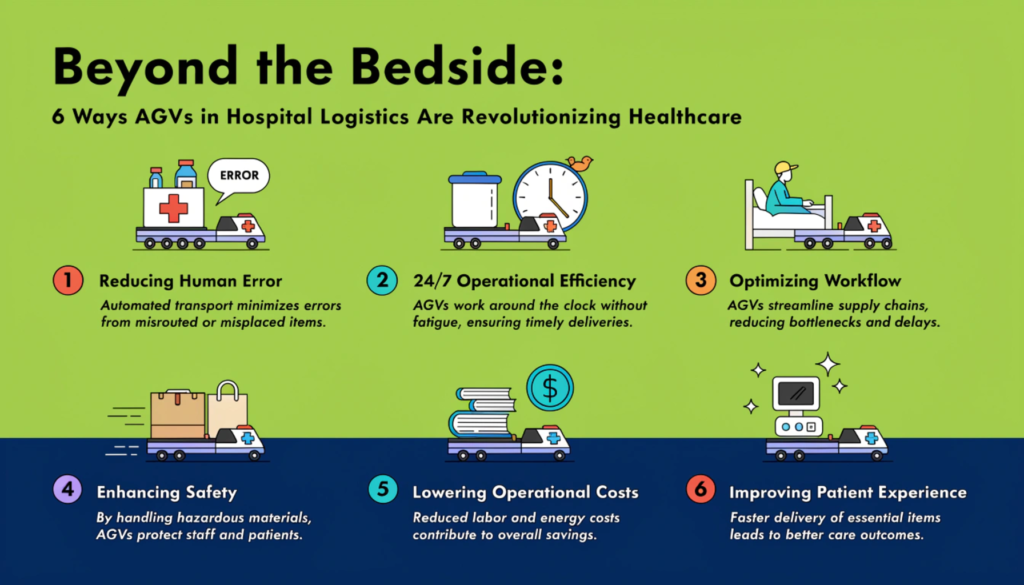
Modern healthcare facilities are mini-cities that never sleep. Behind the urgent bustle of triage bays, surgical theaters, and inpatient wards lies an intricate, high-stakes supply chain. Every day, thousands of pounds of biological specimens, clean and soiled linens, dietary trays, regulated medical waste, and life-critical medications circulate through sprawling corridors. For decades, this operational burden rested on human porters, orderlies, and clinical staff. Pushing heavy carts across miles of tiled corridors pulled skilled personnel away from patient care, introduced human error, and fueled persistent physical fatigue and workplace injuries.
The integration of automated guided vehicles (AGVs) alongside autonomous mobile robots (AMRs) has fundamentally altered this landscape. Far from being a novelty borrowed from industrial warehouses, AGVs hospital logistics has matured into an operational backbone for modern healthcare infrastructure. By adopting advanced hospital automation technology, health systems are decoupling critical material transport from clinical workflow constraints. This strategic shift not only reduces institutional overhead but also builds cleaner, faster, and more resilient facilities.
1. Relieving Clinical Staff from Non-Value-Added Footwork
Nursing shortages remain one of the most pressing crises facing healthcare executives worldwide. When highly trained registered nurses spend up to an hour or two per shift hunting down clean linens, tracking missing medications, or running specimen tubes to central laboratories, patient care suffers. This routine walking is termed non-value-added labor: necessary for facility operation, yet completely detached from clinical decision-making and patient recovery.
Automating internal logistics with AGVs shifts these physical transport demands onto autonomous systems. Fleet-managed robotic units quietly navigate service corridors, summon elevators through building automation networks, and deliver bulk items directly to decentralized nursing alcoves. Relieved of endless manual hauling, clinical teams regain hours of dedicated bedside care time.
The psychological benefit is just as meaningful as the operational return. Removing manual logistics tasks directly curtails the daily physical exhaustion and cognitive fatigue driving clinical burnout. When nurses remain present on their wards rather than wandering basement utility halls, patient satisfaction scores rise, emergency call-bell wait times drop, and retention rates improve across demanding shifts.
2. Elevating Biosecurity and Cross-Contamination Barriers
Preventing hospital-acquired infections (HAIs) requires rigid environmental barriers. Every set of human hands touching a soiled linen hamper, surgical waste bin, or biohazard container introduces an opportunity for pathogenic transfer. During outbreaks or routine shifts with high-containment wards, manual cart handling poses persistent cross-contamination risks across adjacent clinical areas.
Automated vehicles solve this challenge by establishing strict programmatic separation between clean and dirty material pathways. Modern hospital AGVs can be segregated into designated fleets or programmed to run thorough self-sanitization cycles between runs. Because autonomous vehicles enter biohazard or dirty-utility zones without human operators, staff exposure to infectious waste, bloodborne pathogens, and hazardous chemical agents decreases substantially.
These automated systems integrate directly with smart architectural controls, including automated hermetic doors and localized negative-pressure airlocks. An AGV carrying soiled linens or biomedical waste can pass from ward to disposal shoot through dedicated utility passages without crossing public corridors. By standardizing transit routes and minimizing human contact points, health systems reinforce their infection-control protocols with automated consistency.
3. Precision Pharmacy Fulfillment and Chain-of-Custody Security
Pharmaceutical logistics inside a large tertiary care center cannot tolerate delay or misplacement. High-value oncological infusions, scheduled narcotics, and delicate compounded medications require rapid dispatch alongside auditable chain-of-custody tracking. Traditional pneumatic tube systems help with urgent, small-volume vials, but they cannot transport bulky IV bags, fragile compounds susceptible to shear stress, or secure batches destined for automated dispensing cabinets.
Hospital automation technology bridges this gap through secure robotic couriers equipped with electronic locking compartments, biometric verification, and RFID scanners. When a central pharmacy dispatches scheduled narcotics or custom chemotherapy preparations, the items are sealed inside tamper-evident AGV drawers. The vehicle moves directly to the target ward unit, logging every telemetry point along its journey via local Wi-Fi networks.
Access at the destination requires credentialed keycard badges or biometric scans from the receiving nurse or unit pharmacist. This end-to-end electronic audit trail prevents diversion, eliminates lost-in-transit disputes, and satisfies stringent regulatory standards for pharmaceutical tracking. By insulating sensitive compounds from mechanical vibration and maintaining rigorous schedule integrity, AGV networks ensure patients receive therapy exactly when prescribed.
4. Reducing Workplace Strain and Repetitive Motion Injuries
Musculoskeletal disorders represent a large share of hospital workers’ compensation claims and lost-time workdays. Food service workers, laundry crews, and central sterile processing technicians routinely push utility carts weighing between 400 and 1,000 pounds across long distances, up access ramps, and over elevator thresholds. Over months and years, the repetitive acceleration and deceleration of these massive loads lead to debilitating shoulder, back, and knee injuries.
Implementing AGVs for bulk haulage shifts heavy physical exertion to electric drive motors. Whether pulling multiple linen train cages or carrying heavy loads of sterilized surgical instrument pans, autonomous tuggers and under-ride vehicles manage the mechanical stress. Facility staff simply stage the carts, activate the delivery mission through a touch interface, and let the vehicle execute the transit.
Beyond preventing chronic wear-and-tear injuries, robotic haulage reduces acute collisions. Traditional cart pushing often results in blind-corner accidents, scuffed corridor walls, clipped door frames, and pedestrian close-calls in shared hallways. AGVs utilize 3D LiDAR sensors, stereoscopic depth cameras, and dynamic obstacle-avoidance algorithms. They calculate pedestrian paths in milliseconds, smoothly yielding right-of-way to patients, visitors, and emergency gurney teams without sudden or erratic movement.
5. Maximizing Just-in-Time Operating Room Turnover
Operating rooms serve as both the clinical heart and the primary revenue engine of any hospital. Every minute a surgical suite remains idle between procedures represents lost revenue and delayed patient interventions. Operating room turnover hinges on getting instrument trays and custom surgical packs from central sterile processing to the operating room precisely when required, followed by swift removal of contaminated instrumentation once surgery concludes.
AGVs hospital logistics brings factory-grade Just-in-Time (JIT) material delivery directly into surgical suites. Through enterprise integration with hospital surgical scheduling platforms, AGV fleets coordinate supply runs around actual surgery end-times rather than rough schedule estimates. As a surgeon closes, an automated alert summons an AGV with the tailored sterile preference packs for the incoming procedure.
Once the surgical team moves the patient to recovery, the robotic courier delivers the clean instrumentation and safely takes away the enclosed case carts of used instruments back to decontamination. Standardizing this logistical rhythm keeps surgical turnover times predictable. It removes reliance on manual messenger availability, avoids delays caused by missing surgical instruments, and keeps expensive operating rooms operating at peak capacity throughout the day.
6. Real-Time Traceability and Enterprise Asset Optimization
Conventional hospital logistics operates largely as a black box. Once an orderly walks away with a manual cart, supply chain managers cannot easily confirm its location, delivery speed, or idle time without physical checks or phone calls. This lack of transparency leads to hoarding behavior, where department floors stockpile linens, sterile packs, and clinical consumables out of fear that routine resupply runs will fall behind schedule.
AGVs hospital logistics replaces guesswork with high-resolution enterprise telemetry. Every autonomous mobile unit communicates continuously with central fleet management software, which links directly to the hospital’s Electronic Health Record (EHR) and Enterprise Resource Planning (ERP) databases. Hospital administrators gain a bird’s-eye view of material movement across the facility, complete with detailed metrics on delivery duration, route congestion, and inventory burn rates.
Over time, this continuous data stream reveals systemic operational bottlenecks that were previously invisible. Supply chain leaders can adjust dynamic inventory thresholds, refine delivery schedules to avoid peak visitor hours, and right-size cart fleets. Moving from reactive supply runs to predictive, data-driven distribution dampens the bullwhip effect in hospital supply rooms, slashes overall inventory holding costs, and guarantees supplies arrive before stockouts disrupt clinical care.
Core Operational Comparison
The shift from manual transport to autonomous fleets represents a profound structural upgrade for healthcare infrastructure:
| Operational Metric | Traditional Manual Hospital Logistics | AGV-Enabled Autonomous Logistics |
| Labor Allocation | Heavy reliance on clinical staff and orderlies for pushing carts | Automated haulage; human staff focus on patient care and prep |
| Material Traceability | Paper sign-offs, manual phone calls, untracked transit delays | Continuous sensor tracking, digitized audits, live ERP integration |
| Infection Risk | Repeated physical handling of soiled carts across shared public halls | Programmed path isolation, zero-touch transit, clean/dirty segregation |
| Workplace Safety | High frequency of strain, sprains, and corridor collisions | Zero physical strain; obstacle-avoiding LiDAR navigation |
| Delivery Reliability | Variable transit times driven by staffing levels and shift changes | 24/7 predictable dispatch schedules aligned with clinical demand |
Integrating AGVs into Next-Generation Smart Healthcare Facilities
Adopting autonomous transport systems requires thoughtful planning across physical architecture and digital networks. Successful implementations treat AGVs not merely as stand-alone machines, but as interconnected nodes within a unified building automation ecosystem.
Facilities must configure secure Wi-Fi or private 5G coverage throughout all corridors, sub-basements, and service areas to maintain uninterrupted fleet communications. Elevators, fire doors, access-control portals, and automated trash compactors require integrated relays so AGVs can navigate multistory floorplans autonomously without human intervention. Facility leaders must also design operational workflows with clear separation between high-traffic public areas and automated service routes to ensure seamless coexistence among patients, staff, and machines.
As healthcare design trends move toward fully connected, carbon-neutral, and digitally managed hospitals, autonomous internal transport serves as a foundational pillar. Modernizing these behind-the-scenes material workflows enables hospital administrators to build lean, dependable, and highly adaptable operational environments. The result is a facility that runs smoothly behind the scenes, allowing medical professionals to dedicate their complete attention to clinical healing.
To explore how autonomous mobile fleets, smart infrastructure, and next-generation engineering are shaping modern medical centers, Explore smart healthcare topics and see how industry leaders are building the hospitals of tomorrow.