
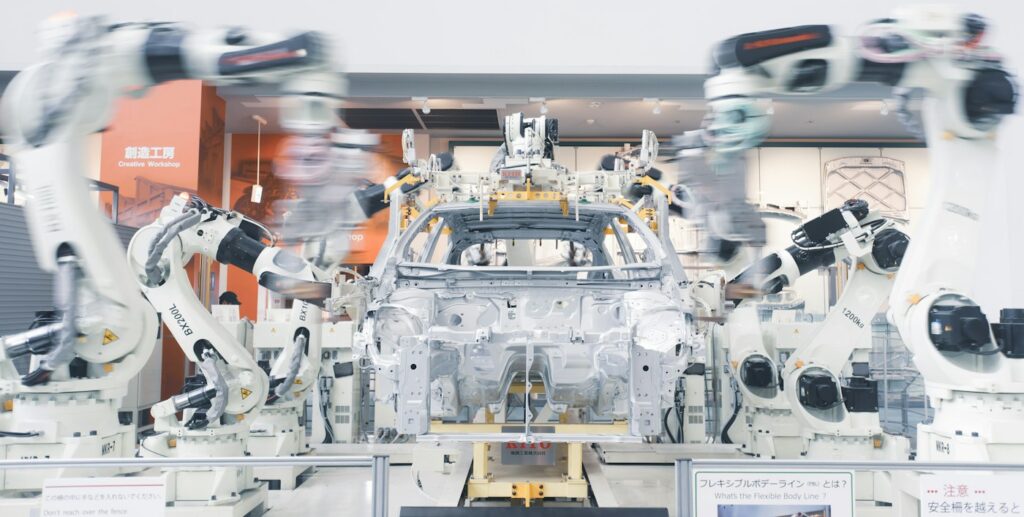
U.S. manufacturers are spending heavily on the equipment that will define the next generation of production. In September 2026, orders for manufacturing technology exceeded $1 billion, according to the Association for Manufacturing Technology’s U.S. Manufacturing Technology Orders report. The month’s $1.007 billion total represented a 38% increase over August and more than double September 2025. The numbers tell a larger story about factory investment, automation and capacity.
What a record month reveals
Machinery orders are not the same as completed factory expansions, and a single month does not guarantee a long-term boom. Still, the scale of the September surge is hard to ignore. Through September, U.S. manufacturing technology orders totaled approximately $5.76 billion, up 45% against the corresponding period in 2025. Manufacturers are committing capital even while energy bills, supply disruptions and equipment delivery times create uncertainty.
AI demand is changing the production agenda
Artificial intelligence is affecting manufacturing in two ways. Factories are looking at AI-powered inspection, scheduling and maintenance tools within their operations. At the same time, demand for AI servers, semiconductors, electrical equipment and associated infrastructure is generating new business for manufacturers. S&P Global’s October survey highlighted strong U.S. factory growth, but also bottlenecks and higher selling-price pressure.
For plant leaders, this makes the investment decision more complicated than simply buying another robot. New automation must integrate with production lines, workers, quality controls and the building systems that keep them operating.
Four questions every plant leader should ask
- Can our infrastructure support the next production line? Additional machines need reliable power, cooling, compressed air and floor-space planning.
- Will automation improve throughput or simply move the bottleneck? Map material flows, quality checks and downstream constraints before procurement.
- Are operators ready? Training, maintenance access and safety procedures should be part of the business case from day one.
- How resilient are our suppliers? Delivery delays and input-cost swings can undermine otherwise promising expansions.
The opportunity is larger than robotics
Manufacturing competitiveness increasingly depends on coordination between automation vendors, plant operations teams, engineering groups, facility executives and technology providers. The best-performing investments will likely be those that solve a measurable production constraint rather than follow a fashionable technology label.
Where manufacturing leaders meet
These questions will be central to conversations around smarter production, industrial AI and operational resilience at BMA Conventions’ Smart Manufacturing & AI Automation Convention 2027, taking place February 23–25 in the Dallas–Richardson area. The event brings together leaders and solution providers exploring practical industrial transformation.
Reporting context: Association for Manufacturing Technology, U.S. Manufacturing Technology Orders (November 2026); S&P Global U.S. Manufacturing PMI, November 2, 2026. Figures refer to reported orders, not completed installations.