
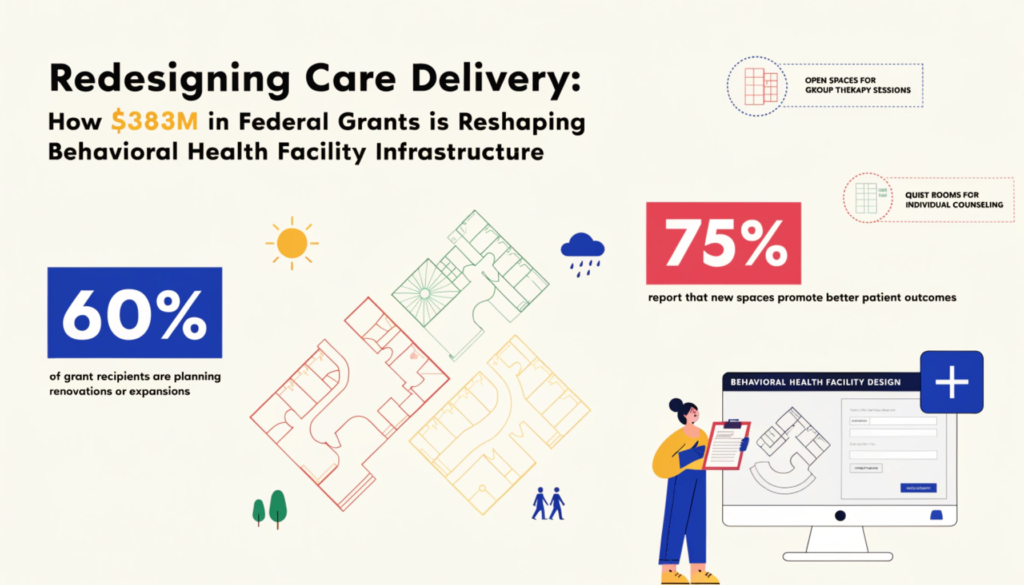
The United States healthcare landscape is undergoing an unprecedented recalibration in how psychiatric emergencies and mental health crises are addressed. On September 8, 2026, the U.S. Department of Health and Human Services (HHS) and the Substance Abuse and Mental Health Services Administration (SAMHSA) awarded over $383.4 million in competitive grants aimed at modernizing behavioral healthcare, suicide prevention networks, and crisis response systems (Fierce Healthcare). Over $252 million of this capital commitment is focused on advancing the 988 Suicide & Crisis Lifeline and deploying mobile crisis teams across communities nationwide.
For healthcare C-suite executives, health system strategists, clinical operations leaders, and facility visionaries, this announcement carries profound strategic weight. The traditional hospital model funneling acute mental health patients into overwhelmed, noisy emergency room waiting areas is clinically counterproductive and financially unsustainable.
To capitalize on emerging federal resources and align with 2026 quality imperatives, healthcare leaders must transform their physical estates. Reimagining behavioral health facility infrastructure requires strategic investments in community-integrated crisis stabilization, modernized behavioral architecture, data-driven crisis routing, and cross-sector care partnerships.
The Strategic Imperative: Beyond Traditional Emergency Room Care
For decades, behavioral health was treated as an operational afterthought in general hospital design. Health systems prioritized high-margin surgical suites, advanced imaging suites, and acute specialty towers, while psychiatric beds were steadily reduced across the country.
The consequences of this disparity are now acutely felt across healthcare balance sheets and emergency departments:
- Financial Drag of Psychiatric Boarding: Patients awaiting inpatient behavioral beds occupy emergency bays for days, generating high administrative overhead and security costs while displacing high-acuity medical cases.
- Clinician Burnout and Workplace Safety: Emergency staff face elevated rates of agitation and violence when managing severe crises in unspecialized environments lacking proper de-escalation infrastructure.
- Community Disconnection: In many regions, emergency rooms remain the sole point of entry, failing to connect patients with sustainable, preventative outpatient support networks.
By deploying dedicated hospital crisis response funding, healthcare leaders have a vital opportunity to overhaul this fragmented continuum. Forward-thinking health systems are shifting away from acute custodial boarding and transitioning toward dedicated, rapid-stabilization environments that deliver superior clinical outcomes at a fraction of the operating cost.
The Rise of Alternative Crisis Models: EmPATH and Stabilization Hubs
Strategic leaders are increasingly recognizing that the built environment directly impacts clinical recovery. The conventional acute psychiatric holding bay—sterile, windowless, and locked—often triggers combativeness and trauma.
Instead, modern health systems are investing in the EmPATH model (Emergency Psychiatric Assessment, Treatment, and Healing) and regional crisis stabilization centers.
Key Pillars of the EmPATH Model
- Therapeutic Spatial Design: Replacing hospital beds with comfortable recliners arranged around an open, luminous central living space. Patients retain autonomy, mobility, and access to food, beverages, and quiet rooms.
- Immediate Multidisciplinary Care: Psychiatrists, social workers, and peer specialists initiate assessment within minutes of arrival, rather than waiting for general medical clearance.
- High Resolution Rates: Industry data shows that up to 75% to 80% of patients treated in dedicated EmPATH units can be stabilized and discharged to outpatient care within 24 hours, preventing costly and traumatic inpatient psychiatric admissions.
For hospital operators, creating an EmPATH unit frees up emergency beds, shortens ambulance turnaround times, and restores general emergency department throughput.
Modern Standards in Behavioral Health Architecture 2026
Physical security and healing aesthetics are no longer mutually exclusive. In behavioral health architecture 2026, leading architects and facility strategists are pioneering evidence-based design principles that ensure total patient safety without feeling institutional or punitive.
Core Architectural Considerations Include:
- Biophilic Design Elements: Incorporating natural materials, expansive daylighting, acoustic attenuation, and views of therapeutic exterior courtyards reduces physiological stress markers and shortens lengths of stay.
- Seamless Anti-Ligature Integration: Engineering protective measures into modern aesthetic fixtures. Sleek tamper-resistant glazing, continuous-hinge doors with load-release mechanisms, recessed LED lighting, and weighted designer furnishings protect vulnerable individuals invisibly.
- Acoustic Sanctuary: Chronic noise is a recognized trigger for behavioral escalation. Strategic soundproofing, sound-dampening ceiling baffles, and private family consultation spaces foster an environment of dignity and mutual respect.
Integrating with 988 Mobile Crisis Facilities and Regional Networks
Federal prioritization of the 988 Lifeline and mobile response networks highlights that hospitals cannot operate as isolated islands. Hospital infrastructure must be designed as an interconnected anchor within a broader regional crisis continuum.
Health systems leading in this space are deploying innovative infrastructure:
- Direct Emergency Services Access Portals: Separate, discreet vehicle bays that allow mobile crisis clinicians, paramedics, and law enforcement to transfer patients directly into specialized behavioral suites without passing through crowded public lobbies.
- Interoperable Care Coordination Hubs: Dedicated digital command centers where clinical navigators coordinate bed availability across regional mental health facilities, community housing, and addiction treatment centers in real time.
- Virtual Tele-Crisis Consultation Suites: State-of-the-art telehealth booths within emergency facilities, enabling rapid consultation with off-site addictionologists, child and adolescent psychiatrists, and specialized therapists.
Executive Action Plan for Health System Leadership
To maximize the impact of federal funding initiatives and position their organizations for long-term operational resilience, executive leadership teams should execute four strategic priorities:
- Re-evaluate the Campus Capital Master Plan: Conduct an immediate portfolio review to identify underutilized hospital wings or administrative buildings that can be adapted into regional crisis stabilization centers.
- Establish Joint Ventures and Community Alliances: Form strategic partnerships with local community mental health centers, county agencies, and non-profit crisis providers to co-develop and staff off-campus triage hubs.
- Leverage Public-Private Grant Opportunities: Engage federal and state funding liaisons to capture allocations from the $383M HHS grant programs, directing matching funds into high-impact capital improvements.
- Prioritize Behavioral Health in Clinical Workforce Strategies: Integrate dedicated physical safety systems, trauma-informed staff break sanctuaries, and ergonomic monitoring stations to attract and retain specialized psychiatric nursing and social work talent.
Conclusion: A Paradigm Shift in Healthcare Infrastructure
The injection of $383.4 million into the nation’s mental health ecosystem confirms that behavioral health infrastructure is a primary pillar of healthcare modernization in 2026. Health systems that cling to outdated emergency department models risk severe operational congestion, regulatory scrutiny, and diminished clinical outcomes.
By championing purposeful behavioral health facility infrastructure, maximizing hospital crisis response funding, and embedding behavioral health architecture 2026 standards across facilities, healthcare leaders can build an adaptable, compassionate care delivery system that serves patients in their most vulnerable moments.