
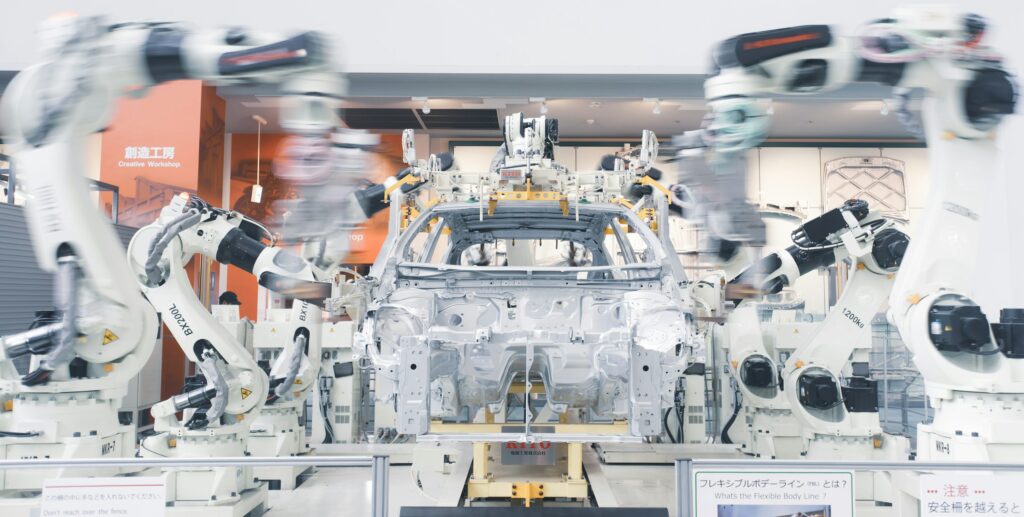
Honda is making a $3 billion bet on the future of American auto manufacturing, and Ohio is at the center of it. The automaker announced plans on November 9, 2026, for an entirely new vehicle plant in Central Ohio. More than 2,000 jobs are expected, along with the capacity to produce up to 240,000 vehicles a year once the facility opens.
The headline is about investment and jobs. The bigger story is about what kind of factory Honda wants to build: one that can adjust to demand for hybrids, gasoline-powered vehicles and, potentially, battery-electric models without betting everything on a single powertrain.
A $3 Billion Plant With a 2029 Target
The proposed factory will sit between Honda’s existing Marysville and East Liberty auto plants, bringing another major production site into an established Ohio manufacturing network. Honda expects production to begin in 2029, subject to final government approvals. The new factory would be Honda’s fourth automobile plant in Ohio.
According to Honda’s official announcement, its planned production network investments would lift total U.S. automobile capacity to approximately 1.3 million vehicles a year. The company has also outlined investments in existing engine and hybrid-system operations.
Ohio officials put the larger state commitment, including the new factory and other Ohio projects, at approximately $3.38 billion and 2,390 new jobs. These are broader Ohio totals, not the figures for the new plant alone.
Why Honda Is Betting on Flexibility Instead of One Technology
For years, the industry conversation focused on the speed of the transition to fully electric vehicles. Now manufacturers must manage a more complicated reality. Customers want better fuel economy and newer technology, but demand can vary by market, model and price.
Honda’s answer is a plant designed for different vehicle and powertrain types. Its planned Ohio facility is intended to support hybrid and gasoline-powered production while remaining capable of accommodating battery-electric vehicles. That flexibility could help the company respond to changing demand without having to redesign its entire manufacturing footprint.
There is a practical lesson for every plant operator here. Flexible manufacturing is not simply a matter of swapping one machine for another. It requires thoughtful facility layouts, adaptable tooling, dependable utilities and production data that engineers can trust.
Automation, Data and the Factory Behind the Factory
Honda says the new plant will use advanced automation, data-driven technologies and flexible production systems. That matters because the real performance of an automated factory is determined just as much by its supporting infrastructure as by its robotics.
Electrical and energy infrastructure
Higher automation density changes the demands placed on a building’s electrical systems. Manufacturers planning new robotics, drives and digitally connected equipment need to account for available power, distribution capacity, energy monitoring and future expansion before production starts.
Maintenance and operating reliability
A manufacturing line designed for multiple powertrains may need more sophisticated maintenance planning, spare-parts strategies and access to specialized technicians. Connected equipment can improve visibility, but maintenance teams still need clear ownership of the data, systems and physical assets.
Production-floor connectivity
Advanced manufacturing depends on information moving reliably between machines, quality inspection, supply chains and engineering teams. Industrial networks and cybersecurity therefore belong in the plant-design discussion alongside HVAC, ventilation, material handling and safety.
The Investment Reaches Beyond One Ohio Plant
Honda is also retooling its Anna Engine Plant to support a next-generation four-cylinder engine and improving parts logistics. At its Ohio transmission operations, the company plans to expand production of next-generation hybrid systems for different vehicle sizes. Honda says those projects are expected to increase Ohio hybrid-system production capacity by 250% in the coming years.
Additional projects in Alabama and Georgia will support engines, vehicles and hybrid systems across the company’s North American production network. Together, these investments show how a new vehicle plant creates work far beyond the assembly line, from suppliers and engineering partners to logistics and workforce training.
What This Means for U.S. Manufacturing Leaders
Honda’s Ohio decision is also a reminder that industrial investment tends to follow more than favorable real estate. Existing suppliers, experienced employees, testing facilities, research capabilities and regional partnerships all help a manufacturer ramp up without starting from zero.
For manufacturing executives weighing their own expansion plans, Honda’s announcement raises three useful questions: Can a new facility adapt if demand changes? Are the power, maintenance and digital systems ready for the proposed level of automation? And can the company recruit and train the people who will keep that factory running after the ribbon-cutting?
Those questions are relevant well beyond automobiles. Aerospace, industrial equipment, electronics and heavy manufacturing face many of the same challenges when they modernize production.
Where the Manufacturing Conversation Goes Next
Investment announcements are important, but execution will determine the results. Honda still needs to complete approvals, develop the site, install equipment, train workers and bring the new facility into production. The projected jobs and output are plans, not completed outcomes.
At BMA Conventions, we believe developments like this are worth examining through the lens of practical manufacturing operations. Robotics and AI are part of the story, but so are the people, building systems, infrastructure and supply chains that allow a factory to deliver.
Our Smart Manufacturing & AI Automation Convention 2027, scheduled for February 23–25 in the Dallas area, brings these connected themes into focus for manufacturing, facility and automation leaders.
The Bottom Line
Honda’s $3 billion Ohio project is a significant commitment to U.S. auto manufacturing. Its most telling feature may not be the size of the investment but the flexibility it is designed to create. In a market where technologies and customer expectations keep changing, the factories built to adapt may have the strongest advantage.
Sources: Honda Motor Co., November 9–10, 2026; Ohio Governor’s Office, November 9, 2026. Figures and timelines reflect announced plans. Cover photograph: Lilian Do Khac / Unsplash, under the Unsplash License. The photograph depicts automotive manufacturing technology in Japan and is illustrative, not Honda’s planned Ohio factory. BMA Conventions is not affiliated with Honda.