

A robot welding a car body is hardly a new sight. What is changing is how deeply automation is becoming part of the business discussion between automakers, their suppliers and the people who run the production line.
On November 17, Reuters reported that General Motors is aiming to raise its use of robots and other automation across North American factories by 20% by 2028, citing people familiar with the plans. The reported target should not be mistaken for a publicly confirmed company-wide commitment. Even so, the wider change it points to is hard to ignore: manufacturers are looking for more output from the same production footprint.
The next automation decision might start with a supplier bid
One of the more revealing details in the Reuters report concerns GM’s supply chain. The company has reportedly been asking parts suppliers to include their own automation plans when bidding on work and using a scorecard to assess the responses. That moves the conversation beyond an automaker installing another production robot.
For a parts manufacturer, it means a customer could increasingly want evidence that production costs, lead times, quality checks and capacity can improve over the life of a contract. A supplier may have an excellent machining process today and still face awkward questions about how it intends to compete three years from now.
But buying equipment to impress a procurement team is a poor strategy. The useful question is whether automation fixes something the plant measures every day: downtime at a bottleneck station, scrap, changeover time, repetitive handling or a difficult-to-fill shift.
A higher robot count does not guarantee a better factory
Automation is easiest to justify when the surrounding process is stable. Feed a robot inconsistent parts, give it an unreliable fixture or put it between two poorly balanced stations, and the investment can simply move the problem downstream.
This is where production engineering, maintenance, quality and operators have to work together. A system that looks fast in a vendor demonstration may lose that advantage when a real plant changes models, deals with a component shortage or schedules repairs. The business case needs to include commissioning, training, spare parts and the people who will keep the equipment running.
The workforce debate is not going away
There is another side to the plan. The United Auto Workers has challenged the idea that increasing automation necessarily benefits the workers building vehicles. Reuters also reported GM’s position that the technology can improve safety, quality and efficiency while supporting manufacturing teams.
Both concerns belong in the same room. A faster process can reduce physically demanding tasks and improve consistency, but it can also change job assignments and staffing needs. A plant that wants an automation project to succeed should discuss these changes early, make training part of the investment and explain how performance will be judged.
The issue is likely to matter even more as automakers approach their next major contract negotiations in 2028. Manufacturing leaders cannot treat workforce planning as something to address after equipment arrives.
What manufacturers should be asking in 2027
The meaningful measure is not how many robot arms a company buys. It is whether the investment helps it deliver better quality, safer operations and a more reliable product at a competitive cost. That requires honest baseline data and cooperation between OEMs, suppliers, facility engineers and people working on the floor.
These are exactly the kinds of practical manufacturing conversations BMA Conventions is bringing together at the Smart Manufacturing & AI Automation Convention 2027, taking place February 23–25 in Dallas. As automation expectations rise, the companies with the clearest answers about people, processes and production performance will have the strongest story to tell.
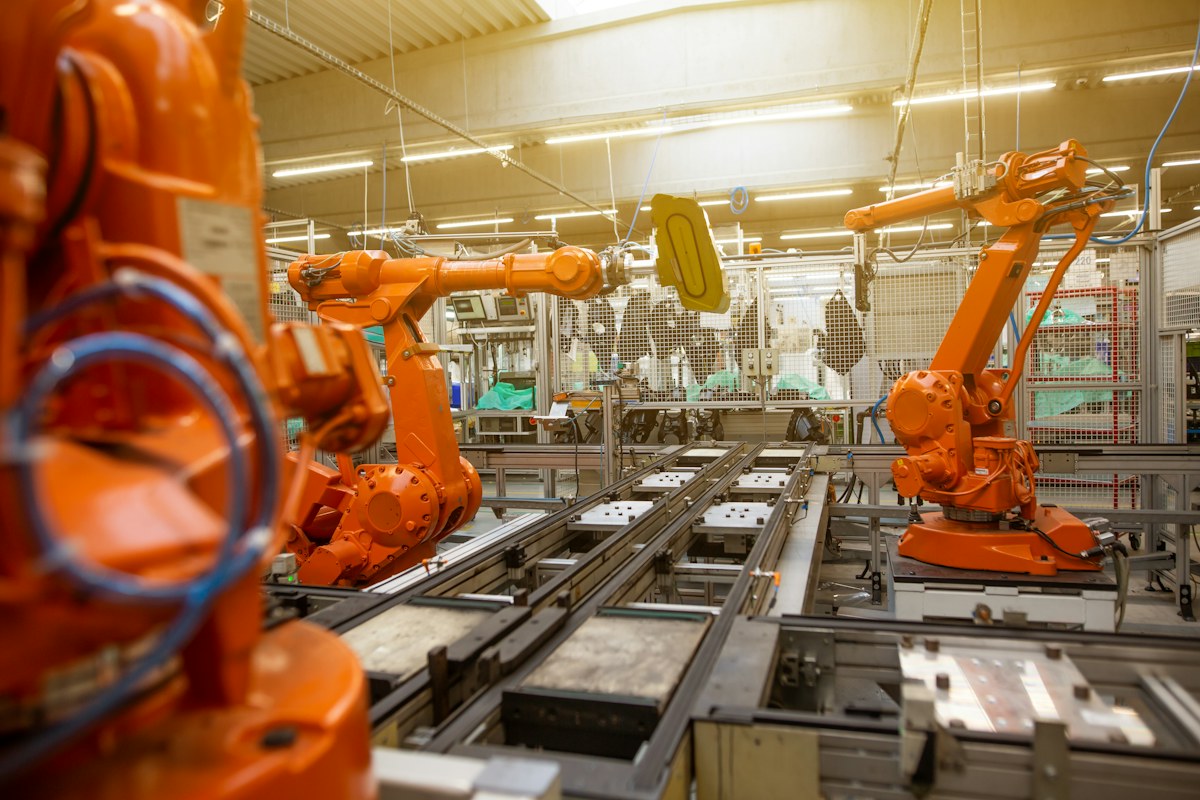
Reporting reference: Reuters, November 17, 2026. Featured photograph: Lenny Kuhne / Unsplash. Both photographs are real editorial images used illustratively and do not show GM facilities.